Friday, April 17, 2015

2016 Land Rover Range Rover Sport SUV Review


What's New for 2016  


The 2016 Land Rover Range Rover Sport gets a new 3.0-liter V6 diesel engine.  


Introduction  


Three years after a significant overhaul that included a new, lightweight aluminum chassis, the 2016 Land Rover Range Rover Sport broadens the iconic luxury SUV's appeal with an optional diesel engine.  

Land Rover says the 3.0-liter diesel will deliver 25 mpg combined -- a 32 percent improvement over the standard gasoline V6 engine -- and 28 mpg on the highway. The new powertrain is poised to be the deal-maker with luxury shoppers who need to haul toys and play off-road, but don't want to sacrifice fuel economy to get there.  

The trade-off? Speed. The diesel-equipped Range Rover will be slower to hustle its mass than its gasoline counterparts. The diesel will be available on both the standard Range Rover and the Range Rover Sport.  

What's Under the Hood? 


The 2016 Range Rover Sport will offer a 3.0-liter V6 turbodiesel engine, in addition to its current gasoline V6 and V8 options. The new diesel is rated at 254 horsepower and 440 pound-feet of torque. The diesel engine's grunt peaks at just 1,750 rpm, which should deliver impressive low-end thrust on initial acceleration, during tricky off-road maneuvers, or when towing a large load.  

Land Rover hasn't announced whether the new diesel improves the SUV's maximum tow rating of 7,716 pounds, but it will put the "range" in Range Rover, as Land Rover says the new diesel is capable of traveling 658 miles on a single tank.  

An eight-speed automatic transmission is the only gearbox available, and it offers Normal, Sport and Manual shift modes. Four-wheel drive is standard.  

Land Rover claims the diesel Range Rover will accelerate from zero to 60 mph in 7.4 seconds en route to a top speed of 130 mph. That's fairly slow for a full-size luxury SUV, but not unexpected from an engine with relatively low top-end horsepower. The Sport model can do the same dash in 7.1 seconds.  

Added insulation to motor mounts, the windshield and engine compartment should help quell the typical worries about diesel engines -- noise and vibration -- and deliver standard levels of Range Rover refinement.  

What Kinds of Features Will It Have?  


For now, the diesel-powered 2016 Range Rover Sport will be offered in only the standard-wheelbase HSE trim level, which comes with 20-inch wheels, a sliding panoramic sunroof, heated and cooled leather seats with 14-way adjustments and heated rear seats.  

Like all Range Rovers, the diesel model comes standard with four-wheel drive and the Terrain Response traction system (which optimizes engine, transmission, braking and suspension systems depending on conditions).  

Like its gasoline counterpart, the Sport model focuses more on city and highway comfort rather than all-out off-road ability. A torque-vectoring electronic differential and adaptive suspension give the Sport model more handling prowess than the standard Range Rover, but it still offers a Jeep-like 8.4 inches of ground clearance and it can wade in water nearly 3 feet deep.  

The Sport also offers three-row seating, although it's really only for kids. Land Rover even says as much and they're not kidding. It's pretty tight back there.  

How Much, and When Is It Available? 


The 2016 Land Rover Range Rover Sport will be available at dealers this fall. The diesel option should boost the big Rover's sticker price to around $91,000, while the Sport should start at around $71,000.  

When it comes to flat-out luxury, there isn't much that compares to the Range Rover. But that doesn't mean it's the only game around. The Porsche Cayenne Diesel delivers similar power and luxury creature comforts, but raises the quotient of on-road fun and performance. There's also the Mercedes-Benz GL350 Bluetec, which while not as capable as the Range Rover or Porsche, delivers high class and offers adult-sized three-row seating.  

Rivals to the Range Rover Sport include the Mercedes-Benz ML250 Bluetec (smaller engine and output, but 25 mpg combined and cheaper) and BMW X5 xDrive35d.  

Check back for a full review of the 2016 Land Rover Range Rover and Range Rover Sport, including specs, driving impressions and buying advice as it becomes available. 


News Source: http://www.edmunds.com/land-rover/range-rover-sport/2016/

Mercedes and Nissan join forces to build midsize pickup


Last month we thought that Mercedes was pulling an early April Fools prank when it announced plans to develop a midsize pickup, but it's completely true and now we're learning more. Mercedes and Nissan have confirmed that they are working together on a new Mercedes pickup that will be based on the Nissan NP300/ Navara.   

The Mercedes pickup will be built by Nissan at its plants in Spain and Argentina. Even though the pickup will borrow its platform from the Nissan NP300, Mercedes is designing it to meet the specific needs of its own customer base. It will also be offered in a double cab configuration, but all the other specs are being kept under wraps for now.   

"Entering the rapidly growing segment of midsize pickups is an important step in continuing our global growth path," Daimler Chairman Dr. Dieter Zetsche stated. "Thanks to our well-established partnership with the Renault-Nissan Alliance, we are able to drastically reduce the time and cost to enter this key segment."   

"Thanks to our cooperation with Daimler on this project, we will be able to share the cost of investment at the Cordoba plant, while at the same time open up new markets in the Latin American region for the Renault-Nissan Alliance," said Renault-Nissan Chairman Carlos Ghosn. "This project will also allow us to optimize production capacity at the Barcelona plant and enhance our competitiveness in an important segment."
  

News Source: www.thetorquereport.com/2015/04/mercedes_and_nissan_join_force.html

Thursday, April 9, 2015

Mercedes-Benz G-Class review


The Mercedes G Wagen, the three-decade old off-roading icon has been given a new lease of life thanks to Mercedes-Benz World, which is importing updated examples of Steyr-Puch’s classic G-class into the UK. Available in right-hand drive and with a choice of diesel engines for the first time, you can now have one of these rugged, boxy, five-seat hand-built Gelaendewagen 4x4s on your driveway. 


But assuming you’re not a UN peace-keeper or professional mountaineer, the question isn’t so much, “Would you be to mad to buy one” but, “Exactly how mad would you need to be?” A little bit nerve-frayed, or a stark raving lottery-winner? Our test example, a 3.0-litre V6 turbodiesel G350 Bluetec version gave us a good idea.

And yet the G-class’s driving experience remains determinedly, irredeemably old tech. Optional 18-inch alloy wheels with 60-profile winter tyres combine with the G-class’s rough and ready “trailing link and panhard rod” suspension for an alarmingly choppy ride on typical urban roads. Performance is as plentiful as you’d ever want given the G-class’s approximation of body control and lack of steering precision, with a 0-62mph time of 9.1sec and a 109mph top speed.Mercedes-Benz should be applauded for the thoroughness of its update to the G-class: this oil-burner gets M-B’s seven-speed auto ’box, electro-hydraulic power steering even, and returns an acceptable (for a two and a half tonne off-road behemoth) 25mpg and 295g/km of CO2 on the combined cycle. You get a full Comand sat-nav system as standard as well as heated leather and even ISOFIX child seat anchorages, while rear DVD screens, a heated steering wheel and a TV tuner are all waiting on the options list.


And this is only the 207bhp, 398lb ft version – there’s also a 500bhp, 516lb ft 5.5-litre V8 AMG model available which manages 0-62mph in 5.5sec and goes on to what would likely be a terrifying 130mph top speed.

But whichever version you choose this is a car you’d only ever drive slowly, particularly over larger bumps and dips, for fear of being thrown out of your seat. And regrettably, Mercedes’ electro-hydraulic power steering doesn’t seem to be powerful enough for the G-class: the car’s helm is now seriously heavy and slow to self-centre.

None of which would matter much if you were buying the G-class for its considerable off-road credentials. This car will forge 600mm of standing water – more than a Land Rover Defender – and has approach and departure angles to humble a Toyota Land Cruiser. There are three separate differential locks, too, for peerless traction in slippery conditions, and a low-range transfer case for the seven-speed ’box.


Add to all that the incredible reputation that the G-class has in 4x4 circles for unstoppable reliability and robustness, and if you regularly venture off the beaten track, you might just forgive the car its ‘characterful’ on-road ride and handling.

But whatever you do, don’t buy the G-class because you think it’s a luxury SUV; certain commercial vehicles are significantly more refined and comfortable. While a Range Rover is just about the most comfortable road car you can buy, we would rate a G-class as just about the least comfortable.

As a true go-anywhere off-roader – now with added creature comforts – the G-class has a place for those who can afford the premium. It’s certainly got character to burn and provides a real sense of occasion. But as an everyday road car, it’s both antiquated and compromised.


News Source: http://www.autocar.co.uk/car-review/mercedes-benz/g-class

Farewell to the king of the off-road, the Land Rover


It was a rough, tough, no-frills, four-wheel-drive bruiser, conceived as a farm vehicle by a British car company emerging battered and bruised from the Second World War.


Nobody, least of all Rover, known in the 1930s for its upmarket saloon cars, expected the cheap-and-cheerful Land Rover to last.

But last it has. When Indian owner Tata Motors finally kills off the Land Rover Defender later this year it will mean the end of the road for an iconic vehicle whose lineage can be traced back to 1948.


“Britain was in a terrible recession and the company needed to earn export dollars,” says Mike Gould, former Land Rover brand manager.

“The company turned to the Land Rover as something they could sell as a utility vehicle, to the farming market and overseas, and earn American dollars through aid programmes.”

From the outset, the Land Rover was an endearingly back-of-the-envelope kind of vehicle. Rushed into production over the winter of 1947-48, the first sketch was drawn with a stick in the sand near the Welsh holiday home of Rover’s engineering director, Maurice Wilks.

But conceived as a stopgap to kick-start car production in a time of austerity, the Land Rover quickly became an industry phenomenon.

In 1948 Rover sold just 1,758. The following year, thanks in part to its adoption by the British armed forces, more than 12,000 Land Rovers left Solihull. By last year the company had sold more than two million Series I, II and III and Defenders.

The secret, Mr Gould believes, lay in the appeal of the Land Rover’s uncompromising devotion to function over form.

“When I was brand manager (in the 1990s) we had a concept to replace it with a vehicle based on the Discovery platform, which would have had more cabin space and been a good-looking vehicle,” he recalls.

But the plan was scrapped, partly as a result of customer feedback.

“One of the most telling comments was made in France,” recalls Mr Gould. “The loose translation was that the Land Rover ‘speaks its vocation’ — in other words, it does what it says in the tin.”

The Land Rover has stubbornly declined to move with the times. In 2012, when the Defender underwent its final upgrade, Autocar magazine lovingly celebrated its shortcomings.

The driving position remained “cramped”, its “tiny, flimsy” windscreen wipers were “awful by modern standards”, the interior trim was “dreadful” and the incongruous chrome running boards were “one of the few remotely style conscious elements”.

But Autocar concluded there was no point in comparing the Defender to any other car. This was a vehicle “for farms, outbacks, jungles and deserts”, capable of tackling a 45-degree slope — forwards or backwards — and wading through water half a metre deep.

In the 66 years since it first rolled off the production line in the British Midlands, the Land Rover has won the hearts of everyone from farmers to royalty.

“It has been a love affair,” admits Matt Prior, road-test editor for Autocar.

At work, Prior has driven the world’s fastest and most luxurious cars. But at home, the family car is a Land Rover Defender — and it’s not immediately clear why.

“It’s slow, it’s noisy, we do 15,000 miles a year in it, which is far too many, it’s uncomfortable and quite thirsty,” he says. “But we love it to bits.”

Diehard enthusiasts such as Prior are attracted to what he calls the “purity” of a vehicle designed to be hosed out, rather than “It was born out of a very straightforward principle and has never carried more mass and fripperies than it has needed to do the job, and that appeals a lot, especially as cars get more complicated,” he says.

The cramped, cold, noisy, boxy workhorse struck a chord right from the off, and in all the right places.

When the newly crowned Queen Elizabeth II embarked on her first tour of the Commonwealth in 1953, a Land Rover Series I went with her. Today, Her Majesty still drives a Defender over the challenging terrain of her Balmoral estate in Scotland.

Like many countries around the world with an historic relationship to the UK, the UAE has a soft spot for the Land Rover, which can claim to have played a significant supporting role in the foundation of the nation.

Quickly adopted by the British army for use in inhospitable climates and landscapes around the world, Land Rover first came to the future UAE in 1951 as the vehicle of choice for the Trucial Oman Levies, the Sharjah-based force set up by the British to protect the borders of the emirates.

In the road-free days of the embryonic UAE, the vehicle quickly became the transport of choice for everyone from fishermen to royalty.

In the years before the foundation of the UAE, Sheikh Zayed relied on a Land Rover for his regular excursions to far-flung desert communities — a partnership commemorated by the Land Rover that has pride of place in the courtyard of the Al Ain Palace Museum, home to Zayed until he became Ruler of Abu Dhabi in 1966.

The Land Rover was also the natural vehicle for oil companies when exploration and production took off. Ferrying oilmen and their gear to and fro across the desert, it played a key part in helping Abu Dhabi to tap into the vast wealth that lay beneath its sands, and which would transform the country beyond recognition.

One mystery is how the archaic Land Rover, with as many failings as charms, has managed to survive all these years as the company passedthrough several owners, including British Leyland, British Aerospace, BMW and, as Jaguar Land Rover since 2008, Tata Motors.

After all, when it comes to such concepts as precision engineering, “the Defender defies description, really,” says Gould. “If you look at the way it’s built, the dash and the rear body are put on to the chassis and then all the other bits and pieces fill in the gaps, basically.”

Such haphazard precision, unsurprisingly, irked BMW, but the Land Rover somehow managed to outwit its new owner’s attempts to impose Germanic efficiency.

“BMW tried to bring in their own method of quality control, which plays a lot on fit and finish of panels, and the Defender simply couldn’t get anywhere near it,” recalls Gould. “So in the end it had its own quality standards.”

Over the years, the family has grown, each new model sprouting refinements that have taken it progressively further from its roots — the Range Rover, first introduced in 1970, followed by the Discovery (1989) and the Freelander (1997).

The original Land Rover was relaunched and renamed the Defender in 1990, but it is in this line of the family, says Gould, through which “a complete line of mitochondrial DNA runs”.

The last really big change was in 1983, when — to the horror of purists — the Land Rover acquired coil-spring suspension, “but although the vehicle has changed engines a few times the heritage is complete all the way back to 1948.”

A “replacement” may be in the wings — the company has released images of something it calls a Land Rover Defender 100 Sport — but it’s more closely related to a Transformer toy than the original.

“It’s a bit like the latest Mini or Volkswagen Beetle, or Fiat 500,” sniffs Autocar’s Prior. “It’s that sort of caricature, which is fine. But it isn’t a Land Rover.”


Few doubt the real Land Rover could bounce, grind and climb its way far into the future — thanks to rustproof aluminium panels and a galvanised chassis, models built in the ‘50s are still on the road, and there is surely a realistic prospect of some Land Rover, somewhere, in about 2050 eventually becoming the first car to be in daily service for 100 years.

In the end, though, economic reality has brought the Land Rover to the end of the road. With no room even for airbags, modern safety and environmental regulations have proved to be a hill too steep.

Heavy reliance on hand-building has also priced it out of a market now dominated by modern, Japanese rivals, complete with creature comforts.

Nothing, perhaps, better captures the incongruity of the Defender’s defiant existence in the modern world than the images currently promoting the modern Land Rover range on the company’s own website.

Photographed in a desert location, with the towers of Dubai clearly visible in the distance, is a parade of six vehicles. At the head of the convoy is the luxurious Range Rover, followed by the Range Rover Sport and Evoque, the Discovery, the new Discovery Sport and the Freelander 2.

And there at the back of the pack, its shape and lines gloriously out of place, trails the Defender, looking for all the world as though it has driven accidentally into the picture through some kind of rent in the fabric of time.


News Source: http://www.thenational.ae/uae/heritage/farewell-to-the-king-of-the-off-road-the-land-rover

Thursday, April 2, 2015

The Real King of Offroad Vehicles: Jeep Wrangler or Toyota FJ Cruiser?

 
Motorists who love going outdoors know that even the latest SUV models are not exactly suited for off roading, especially with car makers prioritizing fuel economy and comfort over performance. That’s why those who like going on adventure trips would rather invest in an off-roader like the Jeep Wrangler and the Toyota FJ Cruiser.  

Both the Jeep Wrangler and the Toyota FJ Cruiser trace their roots to the Willys MB US Army Jeep that were popular during the World War. Toyota’s FJ Cruiser, for instance, came from the Toyota BJ which was inspired by the American Jeeps that roamed around the streets of Japan after the World War.

 But if you were to choose between the two models, which would you rather pick? This article helps you determine a reasonable choice. But first, let’s take a quick look at each offroader.


Toyota FJ Cruiser


The Toyota FJ Cruiser first hit the market in 2007. It is powered by a 4 liter, V-6 engine that produces 260 horsepower and 271 pound-feet of torque. This four-wheel drive offroader has a five-speed automatic transmission and can sit five adults comfortably. Its fuel efficiency rating is estimated at around 16 miles per gallon for city driving, and 20 mpg for highway driving. 

Jeep Wrangler 


The Jeep Wrangler is powered by a 3.6 liter, Pentastar V-6 engine that churns out 285 horsepower, or about 40 percent more power compared to the older engine of the previous model. Like the FJ Cruiser, it has a five-speed automatic transmission. 
Fuel economy has never been a strong suit of Wrangler, and the Jeep shows just that. The 3.6 liter V-6 engine has a very pedestrian 17mpg rating for city driving and 21 for highway driving.

Comparisons 


As you could see, the Jeep and FJ Cruiser have a lot of similarities. Both have V-6 engines with five-speed automatic transmission. Even their sizes are almost identical, although the Toyota car has a shorter wheelbase. The Cruiser, though, is a bit longer overall.

It’s not a surprise then that both have the same performance on the road. 

The FJ can move from standstill to 60 miles per hour in around 8 seconds. On the other hand, the Jeep Wrangler can hit the mark in two milliseconds faster. The same goes for braking and handling. The Jeep Wrangler takes 132 feet to halt when moving at a pace of 60 mph, and the Toyota needs just one foot longer to do the same. 

And even though the Jeep has a smaller V6 engine, it trounces the FJ Cruiser with more power at 285 horsepower. 

It should be noted that the FJ Cruiser is on its way out, as Toyota has announced it won’t be coming up with a new model after 2014. So you would be stuck with the same engine that has been used since 2010. The FJ accelerates well enough, but its engine emits a distracting bellow as it picks up speed. And while the steering of the FJ Cruiser may feel quick, but it is less precise compared to the Jeep. 

The engine of the FJ Cruiser may be outdated but it does not look like an old SUV inside. The interior looks cool, with a dash-mounted clock, overhead console with a hill descent control, and compass making up a set of very functional on-board tools. 

Both vehicles have in-dash CD and MP3 players, although the Jeep Wrangler offers satellite radio as a standard feature. The said feature is an upgrade for the FJ Cruiser. But the Toyota vehicle has radio steering controls as an upgrade option. 

The Jeep Wrangler also offers more interior space than the FJ Cruiser. It has more rear legroom at 37.2 inches, better than the 31.3 inches of the Toyota car. Cargo volume of the Jeep Wrangler is at 46.4 cubic feet, a lot more spacious than the 27.9 cubic feet of the Cruiser. The Jeep Wrangler is a better choice for motorists who would find themselves transporting more cargoes. 

In terms of price, the FJ Cruiser and the Jeep Wrangler have almost identical price tags. The MSRP of the Toyota off-roader is around $33,500 to $34,500 while its counterpart is priced between $26,000 and $34,000. 

The resale values are also pretty much the same, with the FJ Cruiser having a 55 percent resale value while the Jeep has 53 percent resale value. 

So which one is the better choice? Hands down, the Jeep Wrangler is the king of off-roaders. It may have a smaller engine but its 3.6 liter powertrain is capable of producing more power. It also offers more cargo space and is slightly faster than the FJ Cruiser. And since both vehicles are in the same price range, you’d rather go with the more reliable and powerful Jeep Wrangler.


News Source: http://www.0-60specs.com/the-real-king-of-offroad-vehicles-jeep-wrangler-or-toyota-fj-cruiser/

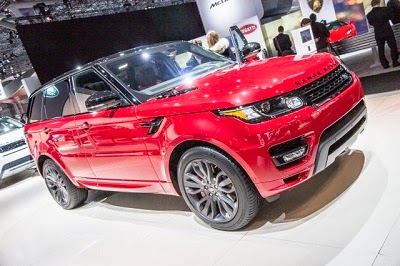
2016 Range Rover Sport HST Limited Edition: New York 2015 Auto Show Preview


The new generation of the Range Rover Sport is already a hot SUV thanks to the arrival of the new SVR model, which takes the Jaguar-Land Rover 5.0-liter supercharged V-8 and turns up the handling wick as well, rocketing to 60 mph in just 4.5 seconds and around the ‘Ring in 8:14. Now there’s the HST.

Think of the 2016 Range Rover Sport HST Limited Edition as the saner, more design-conscious choice. With the 3.0-liter supercharged V-6 found in a bevy of today’s Jaguar and Land Rover vehicles, but here rated at 380 horsepower, the HST is more potent than the standard 340-hp Range Rover Sport. A “more focused driving experience and sharper responses” are promised, thanks to a revised suspension tune.  


It’s also differentiated from the regular model with a black exterior theme, including darkened front and rear lights with non-reflective surrounds, 21-inch alloy wheels in dark satin grey, red brake calipers, gloss black finishes on the hood, fender vents, grille, and fog lamp surrounds, and a Santorini black roof to contrast with the body color. A red sport badge at the rear and HST badges on the front fender vents complete the exterior tweaks of the HST Limited Edition..


 Inside the HST, upgrades include: Oxford leather upholstery; ebony-color door trim, head liner, and center console; HST badges on the dash, instrument panel, and carpet mats; Noble-plated paddle shift levers, bright “Sports” pedals, and aluminum interior trim with “Sports” textured finish.


News Source: http://www.motorauthority.com/news/1097403_2016-range-rover-sport-hst-limited-edition-2015-new-york-auto-show-preview

2016 Mercedes-AMG G65 Brings V-12 Goodness For $218,825


If you thought the G63 AMG wasn’t badass enough, wait until the G65 AMG hits the scene later this year. The V-12 brute has been on sale elsewhere since 2012 but it’s now coming to the U.S., priced from a staggering $218,825, including a $925 destination charge.

This means the Mercedes-AMG skunk works now has four models priced above $200k, with the other three being the SL65 ($216,175), S65 ($222,925), and S65 Coupe ($231,825). Of course, there’s also the bonkers G63 6x6, which cost upwards of half a million dollars, though this six-wheeled monster has just ended production.


Despite costing less than half the price of the G63 6x6, the insanity factor by no means has also been cut in half when we’re talking the G65. It’s twin-turbocharged 6.0-liter V-12 delivers 621 horsepower and 738 pound-feet of torque, allowing the big brute (it weighs almost 6,000 lbs) to accelerate from 0-60 mph in just 5.3 seconds, rivaling many dedicated sports cars. 
But unlike a sports car, the G65 is also fully capable off the road thanks to its raised ride height, transfer case and trio of differential locks. The transmission is a seven-speed automatic, and the vehicle's top speed is electronically limited to 143 mph. 


The U.S. remains one of the biggest markets for the G-Class, with 2014 being the best year yet for sales of the vehicle. Buyers here snapped up 3,090 of them last year, with more than half of these being Mercedes-AMG’s G63 variant. We wonder if the G65 will fare any better. Sales start in November.

News Source: http://www.motorauthority.com/news/1097545_2016-mercedes-amg-g65-brings-v-12-goodness-for-218825