Saturday, January 23, 2016

Top 10 Off-Road Vehicles

 10. Mercedes-Benz G500


 Mercedes-Benz is widely known for their luxury cars but Mercedes can also put out great off-road vehicles. The G500 is a great representation of that, originally crafted as an armed forces vehicle in the 1970’s and it hasn’t changed too much from its roots this vehicle is a beast when it comes to the off-roads while still keeping a luxurious feel. At its core the G500 still has that original body-on-frame build along with solid axles at each end of the chassis. What really makes the G500 stand out as a off-road vehicle is the fact that it has 3 electronically activated locking differentials which is extremely rare for a luxury vehicle.

9. Chevy Colorado Z/71


 Most notably known as the little brother to the Chevy Silverado, the Colorado is beginning to step up to the Silverado’s level. The Colorado is not yet on the same when it comes to towing but on a tight trail the Chevy Colorado comes out on top. The road package for the Colorado includes a hill descent control system, an automatic locking rear differential, and an upgraded suspension. The Chevy Colorado is a great off-road vehicle and quickly garnering more and more respect.

8. Nissan Xterra Pro-4X


The Nissan Xterra has always been notorious for its superb off-road abilities, this vehicle can really handle whatever you throw at it and it’s only improving. The most recent additions onto the Pro-4X are a hill descent control and hill start assist which makes sure the Xterra won’t roll backwards on a steep incline. The Pro-4X is also decked out with some large all-terrain tires along with some Bilstein shocks. The Nissan Xterra is designed perfectly for tight trails without the possibility of facing any body damage.

7. Toyota Land Cruiser


 The Toyota Land Cruiser is one of the most well known off-road vehicles, when it comes to powering through terrain few vehicles can match the power of the Land Cruiser. The Land Cruiser can handle any type of trail you throw at it with its smooth riding independent front and coil-long solid axle rear suspension. Another unique addition onto the Land Cruiser is Toyota’s Kinetic Dynamic Suspension, this allows for more suspension movement in off-road situations and then tightens up once you hit the high speed roads. It’s a one of a kind system that you’ll be hard pressed to find anything similar in another off-road vehicle.

6. Land Rover Range Rover


The Range Rover is one of the most well known off-road vehicles and for good reason, not only is it a sleek luxurious vehicle but it also packs a lot of punch. The Range Rover features an adjustable and long travel air suspension as well as a computer controlled Terrain Response four-wheel drive system. One of the most unique features the Range Rover offers is the fact it can cross water up to three feet deep. The optional locking rear differential also allows the Range Rover to clear obstacles that would trump most off-road vehicles.

5. Ford Super Duty


When it comes to heavy towing there are few pickup trucks better than the Ford Super Duty. While most pickups use an independent front suspension the Super Duty uses a solid beam axle which allows for increased durability and the ability to handle larger than stock tires. There’s also an option for an electronically locking rear differential allowing the Super Duty to handle even the roughest terrains.

 4. Ford Raptor


To put it simply the Ford Raptor is an absolute monster when it comes to high speed off-road vehicles. The Ford Raptor has an independent front and solid-axle rear suspension system which provides roughly a foot of wheel travel at each corner, which is double the size of a usual pickup truck. The ginormous 35 inch tires also allow it to roar through most off-road terrains. The Raptor is also almost as capable in slow, rough terrains as some of the much larger off-road pickup trucks.

3. Ram Power Wagon


When it comes to the best off-road pick up truck the Ram Power Wagon takes the cake. The Power Wagon takes all of the Ford Super Duty’s strengths and builds off of them with its solid axles front and rear and coil-link suspension. To increase articulation in the three-link front suspension the Articulink was created to allow for more flex in the suspension when facing rough terrain. If you feel you need more flex in the suspension you can press a button to disconnect the swaybar to allow for more suspension. The Power Wagon also features a suped up locking front and rear differential allowing the truck to power through muddy situations.

2. Jeep Wrangler Rubicon Hard Rock Edition


 The Jeep Wrangler Rubicon is built for off road havoc, and the 2015 Hard Rock Edition just makes this vehicle even more of a beast. The Hard Rock Edition includes blacked out trim, tough bumpers with removable end caps, red tow hooks, and rock rails. There is no terrain too tough for the Jeep Wrangler Rubicon to conquer. When it comes to the off roads there are few better than the Jeep Wrangler Rubicon.

1. Toyota 4Runner TRD Pro


 The Toyota 4Runner has long been one of the best vehicles for off-road purposes, and the 2015 TRD Pro edition is no different. Specifically designed to be able to handle the off-roads as well as it handles the streets. The TRD Pro edition includes a locking rear differential as well as Crawl Control which is Toyota’s version of cruise control for off-road. There is also a new suspension system which allows for an extra inch of wheel travel. The vehicle is also decked out with taller Goodrich All-Terrain tires that wrap around faux beadlock wheels. The 2015 4Runner TRD Pro once again has once again proven why the 4Runner is thought of as one of the top off-road vehicles.

Source: http://providenceautogroup.com/top-10-off-road-vehicles/

Tuesday, January 19, 2016

The new Mercedes G-Class: a living legend


The new G-Class range include the G 500 with a new 4.0 liter V8 biturbo engine, the exclusive AMG Edition 463 and the G 500 4×42.

The G-Class icon is beginning a new chapter in a success story that spans more than 35 years. Launched in 1979, this classic off-roader continuosly improved technology level and high-class equipments.

A new 4.0 liter direct injection V8 bi-turbo engine is now celebrating its world premiere in the G-Class. Based on the new V8 generation developed by Mercedes-AMG, the new engine delivers 422 HP and 610 Nm in G 500. With two turbos and Nanoslide technology for the cylinder bore surfaces, the new V8 delivers 35 HP and 80 Nm more than the previous 5.5 liter naturally aspirated V8. The new G 500 accelerates to 100 km/h in 5.9 seconds (6.1 seconds for the old V8) and needs 12.3 l/100 km compared with 14.9 l/100 km for the previous model.


Here is the complete G-Class range:


  • G 350 d with 245 HP and 600 Nm (211 HP and 540 Nm for the old model) is more efficient now with a fuel consumption of 9.9 l/100 km (11.2 l/100 km previous model)
  • AMG G 63 delivers now 571 HP instead of 544 HP.
  • G 65 AMG has now a maximum output of 630 HP compared with 612 HP in the past.
  • G 500 4×42 with the same 4.0 liter V8 biturbo with 422 HP.


All G-Class versions offers unrivalled off-road performance with permanent all-wheel drive, low-range gearbox and three differential locks that can be engaged while on move.


The G 350 d, G 500 and AMG G 63 are equipped as standard with start&stop function, has optimised ESP system and G 500 features optionally the adaptive damping system with Sport and Comfort modes.

The Sport Mode will provide more agile on-road behavior and a smaller roll in corners.

In G 350 d and G 500, the 7G-Tronic Plus automatic transmission now also features a manual transmission mode, which can be activated by presing the M button.

Mercedes offers a special edition for the AMG versions named AMG Edition 463 available for the G 63 and G 65. The interior specification includes a two tone instrument panel, two tone seats in high quality designo leather with side bolsters in carbon look leather and constrating topstiching, seat and door centre panels in a diamond look, carbon fibre trim and door pulls in nappa leather.

The G 63 benefits of the exclusive 21 inch 5-twin spoke light alloy wheels in matt black and 295/40 R 21 tyres. G 350 d and G 500 can be recognized by their restyled bumpers and flared wheel arches in the vehicle colour. The G 350 d comes as standard with 18 inch 5-spoke light alloy wheels. Both G 350 d and G 500 feature a new instrument cluster in two tube look with 11.4 cm multifunction display.


G 500 4×42 features considerably wider track due to the portal axles (plus 264 mm), the large 22 inch wheels and adaptive drive train with Sport Mode.

The G 500 4×42 will be available from December 2015 while the rest of the range is already available from September 2015.

Here is the price list for Germany with VAT included:


  • G 350 d                   ==> 89,822.35 euros
  • G 500                      ==> 105,035.35 euros
  • G 500 4×42             ==> 226,100 euros
  • AMG G 63               ==> 143,216.50 euros
  • AMG G 65               ==> 271,915 euros
  • AMG G 63 Edition   ==> 463 159,341 euros
  • AMG G 65 Edition   ==> 463 282,208.50 euros


Source: http://mercedesblog.com/the-new-mercedes-g-class-a-living-legend/

Thursday, January 14, 2016

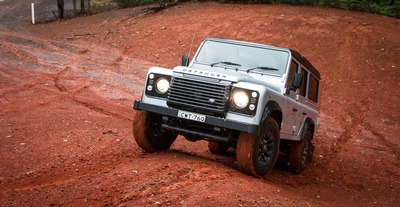
2016 Land Rover Defender 90 Review

This is it. The end of an era. The Land Rover Defender is on its way out the door, and it won’t be replaced until about 2018.  


This hardcore off-road machine has carved itself a niche as something of an ultra-cool urban cruiser, despite the fact its roots are far from that.

 The original Land Rover from 1948 was designed with agriculture in mind, and farmers bought them in droves over the years, with utility the main selling point and comfort low on the list. Over the years the original Land Rover has morphed and changed plenty, but this body style has been around since 1983.

Back then it was just called the 90, representing the length of the car’s wheelbase in inches (though in actual fact it measures 93 inches, or 2360 millimetres). Land Rover slapped a new badge on the car in 1990, and from that day on people have referred to this car and all of its predecessors as the Defender. Just make sure you never say that to a Landy enthusiast…


And this car, then, is the final iteration of the Land Rover Defender 90, the Heritage Edition.  

This rare model – limited to just 2564 examples worldwide – is already well and truly sold out, with its $54,900 (plus on-road costs) price tag clearly not deterring those with more dollars than sense. In fact, there have been instances of buyers pulling out, with envious punters apparently forking out nearly $100,000 for the privilege of owning one of these final Defenders. The British brand could probably have built 10-times that number of Heritage Edition models, and still had demand for more.  


The Heritage Edition catches plenty of glances in traffic thanks to its brilliant Grasmere green paint finish (it looks flat, but it’s actually a three-layer pearl), and pays homage to the first ever registered Land Rover, which had the numberplate HUE 166 and was affectionately referred to as Huey. You can see there are plenty of HUE 166 highlights on this vehicle, including on the flanks and in the cabin.  

There are also heritage hallmarks like the original Land Rover badges front and rear, and these models were built on the same production line that the first ever versions of the Land Rover rolled down, in Solihull, England.  

Inside, that retro Land Rover logo is emblazoned on the Almond cloth trimmed seats, and there are also red and yellow trims around the gearshifters and a metallic four-wheel drive plaque to help you on your way.  


It looks great – for a Defender – but this is a cabin with some serious issues that haven’t been resolved over the years.  

The seating position is horrendous.  
There are no airbags – yes, you read that correctly, zero airbags.  
Climbing in and out is painful, verging on ridiculous for those in the back seats.  

And Australian models are fitted with a Supercheap Auto special Alpine CD player which couldn’t look more out of place if it tried.  


Those things will either float your boat (if you’re a Land Rover sympathiser) or float it like a set of concrete-filled tyres (if you’re a normal buyer).  

It is pretty hard work. The rear two flip-down seats are best considered “for occasional use only”, as climbing in through the boot is hardly glamorous (the front seats don’t fold down to allow access), and anyone above about 165cm will feel cramped – knees up, head down.  

The front seats are positioned very close to the doors, making for cramped occupancy for larger occupants, and – as colleague Trent always says – you may need to have the windows down to allow for enough space for arm movement, as the Land Rover Defender requires quite of a lot of steering effort.  

The Defender’s steering is slow, meaning lots of arm-twirling and because the rack itself is slow U-turns soon become three-, five- or even seven-point turns.  


The vehicle rides on coil springs front and rear, but still bounces over bumps – big and small – and leans a lot through corners. On-road prowess isn’t this thing’s forte, though: it’s designed to be super capable off-road, and having driven Defenders over treacherous terrain in the past, we can assert that they are menaces in the mud. We didn’t take this one off-road, though: with just a few dozen in Australia, it wasn’t worth the risk.  

As painful as it is to drive around town, it is, perversely, a lot of fun to drive, mainly because you feel like you’re driving a piece of automotive history. Almost every other vehicle on the market right now is more advanced than the Defender, but at the very least you feel like you’re involved in the drive experience.  

Under the bonnet is a 2.2-litre turbo diesel four-cylinder engine with 90kW of power and 360Nm of torque, which is paired to a six-speed manual gearbox. There is no auto. Never has been, either.  


The engine isn’t as refined as many other diesels on the market – it isn’t as linear in its power delivery as some, with some low-rev turbo lag from a standstill, and a relatively narrow torque band.  

The gearshift isn’t great, either, with a number of testers claiming they had trouble when attempting to rush the shifts. Slow and steady, then…  

The Defender, as with all Land Rover models, is covered by a three-year/100,000km warranty, but there’s no capped-price service program.  

Look, it would be hard to live with a Land Rover Defender 90. It isn’t city-friendly by any means, despite the fact you’ll often see them scattered in those cramped backstreets where hipsters sit on milk crates and discuss beard care.  

If you set aside the legacy value, and if you have no plan to actually go off road, the Defender 90 is a pretty hard vehicle to score highly. It’s just so damn flawed, yet still manages to be one of the most characterful and likeable vehicles you can buy.  


If, however, you’re going to use it for its intended purpose, you’d be totally justified in choosing it … or any number of competitor vehicles with similar levels of capability and better levels of safety, like the Toyota FJ Cruiser, Jeep Wrangler or even the Suzuki Jimny.  

As such, the Land Rover Defender 90 Heritage Edition is a great way to farewell an icon, albeit a flawed one. 


Source: http://www.caradvice.com.au/407276/2016-land-rover-defender-90-review/


Nine Best Off-Road Truck Trims

Off-road truck trims are a conundrum. People like the idea of them, but consumer surveys and studies have shown that few trucks are driven off the pavement often.


 The thought of having utility (a truck does have a bed), off-road capability, and more comfort (usually) than a Jeep Wrangler is intriguing. So here are the nine best recent off-road truck trims.


2012 Ford F-150 SVT Raptor


Conversations on off-road truck trims all flow downhill from a single source: the mighty Ford F-150 SVT Raptor. Or, more simply, the Raptor.
For the uninitiated: A 6.2-liter V-8 is paired with a six-speed automatic, four-wheel drive, and a suspension that makes you feel like a hero off the road and doesn't punish you on the road.
In comparison after comparison, the Raptor was chosen as the best out-of-the-box off-road truck. But the conversation doesn't end with the Raptor. Not everyone is looking for that level of off-road madness.


Ram 1500 Rebel


Sure, you can get the Ram 1500 Rebel with the base Pentastar V-6, but you'll want to spring for the 395-hp, 5.7-liter Hemi V-8. Outside of the dealer-built Ram Runner a few years ago, the Rebel is the most serious off-road truck you can purchase straight from the Ram dealership.

We liked it on-road but felt it lacked a special something when off the highway in a recent comparison.


Toyota Tundra TRD Pro


Toyota's Tundra TRD Pro is the flagship of the automaker's off-road portfolio, and it perhaps comes closer to a true Ford Raptor competitor than anything else on the market.
The 5.6-liter V-8 under the hood cranks out 381 hp, giving it more than enough grunt to throw some rocks, and the suspension is tuned in such a way that the truck inspires confidence off-road but doesn't make you suffer everywhere else.


Toyota Tacoma TRD Pro


The Tundra TRD Pro is a champ in the big whoops and high-speed off-road running. The smaller Tacoma TRD Pro is quite a bit cheaper, but it's also a bit less capable.
The Tacoma is far more comfortable at moderate speeds and would make a nice companion for occasional fire-road ripping.


Nissan Frontier Pro-4X


Throw the Nissan Frontier Pro-4X at something more significant than a fire road, and you'll be surprised when it handles it without breaking a sweat. The Frontier isn't known for being the most refined smallish pickup, but it does compose itself nicely when the dirt road gets rutted and twisty.


Chevrolet Colorado Z71 Trail Boss


The Chevrolet Colorado Z71 Trail Boss is an intriguing combination: Goodyear Wrangler DuraTex tires, supplemental LED lighting, a revised suspension, front recovery hooks, hill descent control, and an automatic locking rear differential.
It's not a mini-Raptor, but the Colorado Z71 Trail Boss, perhaps with the new Duramax turbodiesel, sounds like an excellent truck for hitting the trails and fire roads.


Ram 2500 Power Wagon


A heavy-duty six-speed automatic, 410 hp, and some 6,700 pounds (3,039 kg) of metal: The Ram 2500 Power Wagon is comfortable and capable on-road, and it's also surprisingly good off-road.
We took one rock crawling in Sedona, Arizona, and were impressed with how competently the full-size truck handled boulders and steep climbs.


2012 Ram 1500 Mopar Ram Runner


Ah, the Ram Runner. Buyers could take their brand-new Ram 1500 and throw the Mopar off-road parts catalog at it. The Ram 1500 became a legitimate threat on the performance front to the Ford Raptor.
Unfortunately, the window sticker never said "Ram Runner," and the customer had to wait for the truck to be built. At this point many of those trucks are out of factory warranty limits, so turning to a respected aftermarket tuner might be the best plan if you're thinking about a Ram Runner now.


2017 Ford F-150 Raptor


Will we be quoting Arthurian legend when it comes to the 2017 Ford F-150 Raptor? It might remain the once and future king of the off-road trucks.
The new truck is slated to get a powerful iteration of Ford's 3.5-liter, twin-turbo EcoBoost V-6 that will crank out 450 hp and likely surpass the 434 lb-ft the previous truck's V-8 produced. The same engine in the "regular" F-150 puts out 365 hp and 420 lb-ft of torque. This is looking good. A 10-speed automatic will send power to the four corners, and mechanical lockers will make sure the truck can get traction.

Maybe might does make right.


Source: http://www.motortrend.ca/en/enthusiast/feature/hot-lists/1512-nine-best-off-road-truck-trims/

Tuesday, September 22, 2015

2015 Land Rover Defender 110 Review


“Lovely Defender”, said a small voice from somewhere behind the tailgate-mounted spare wheel, later revealed as belonging to an admiring Septuagenarian.

“My husband had one years ago, though I had to sell it when he died.” 

Such is the vintage of the Land Rover Defender, essentially unchanged in design for decades, just like its raison d’etre. And unchanged too are the memories it evokes in some, and the recognition it invokes in others. 

Let’s not proverbially beat around the bush before we do it literally. You probably know something of what the Defender is, what it represents. This is a car that has its roots in the original 1948 Land Rover model, though it only took on the Defender name in 1990. 


Inside and under the bonnet it’s updated, thankfully, with more regularity, with a Euro 5 2.2-litre turbo-diesel added in 2011. 

But all things must come to a close. The pop-riveted, aluminium-bodied Defender is on death row, to be undone by the legislator’s pen in Europe from year’s end — though the long-wheelbase 110 tested here, as a commercial vehicle, could maybe eke out a few more years. Land Rover is developing a successor, but an era is approaching an end. 

And as said era crawls over crags to its denouement, we thought to take an opportunity to spend some time in this timeless old lug that’s built to go the distance, but won’t get you where you’re going in anything much resembling comfort. 

Now, on this occasion we had scarce opportunity to take it across deserts and through swollen rivers, nor could we traverse jungles and scale mountains. But come on, you don’t need us to tell you what 67 years of history already does. The Defender handles what few others can. 


But what we are able to do is talk a bit about what living with a Defender is like, both on the road and off… and all the while, ruminate on what such an anachronism represents and if we stand to lose anything of value when this iteration goes away. 

Our test vehicle was the long-wheelbase 110 Station wagon, priced at $47,500 plus on-road costs at entry level, a $4700 premium over the Defender 90 Shortie. That’s more than $6000 cheaper than a mine-spec DX Nissan Patrol and about ballpark with a top-spec four-door Jeep Wrangler. 

Like the Wrangler, it’s a little remarkable how many Defenders you see in the city, many of which like the Jeep Wrangler serve more as fashion statements than tools of trade. Having grown up driving an MQ Nissan Patrol from the early 1980s, the ergonomics were somewhat familiar to yours truly. 

The cabin is the definition of tough and basic. The layout is sparse, the ventilation controls need a heave and the plastics, grey and shiny black, are hard but harder-wearing. The aftermarket audio system with Bluetooth and the electric front windows are concessions to modernity. 


The relatively narrow dimensions mean the doors have no pockets, and handles that rub in your knees, just like the gearstick does on the other side. The door catch also has a knack for recognising and grabbing a hold of the loops that hold your belt on. 

On the topic of recognition, it’s rather charming that every Defender driver you pass gives you a quick wave out the window. And, rest assured, they’ll have said arm free, because driving without it half-resting on the window-pane is a cramped exercise. At least outward visibility is good. 

Please don’t think we’re giving the Landie a needless kicking, because these old school trappings are kind of a central point of the car. It’s a throwback in numerous good ways, but it’s also a clear signpost of how far cabin ergonomics have progressed. 

And yet there’s a silver lining. Flip those high second-row seats down with a heave-ho and jimmy open the rear tailgate, and you have what is tantamount to a van. Our test car had a hard-wearing rubbery floor (which can be hosed out), and though the loading area is narrow at its deepest point, it is tall and 1900mm long. It also has a payload nearing one-tonne.

Standard equipment stretches to a sub-woofer for the audio system, a powerful air-conditioner, electric windows and a rear folding step. Some choice options include a sunroof (an affordable $590), side runners ($740), contrasting black roof ($730), leather seats ($2400), third-row seats (from $2000) and heated front seats/windscreen ($820).


Airbags? Nope. This is made for rock-hopping and handling hardcore departure angles. It does at least have ABS brakes and electronic traction control. 

Again, and this should surprise precisely no-one, but driving a LWB defender around narrow city streets makes only a smidgen more sense than taking a Toyota 86 through a river crossing. Its turning circle is as high as 14.4 metres and its ‘worm and roller’ hydraulic power steering has as much resistance as a sleeper cell. 

The off-road-oriented all-round live beam axles with coils are designed to handle a beating and articulate to all manner of crazy angles, not provide supple bump absorption and finesse over corrugations in bitumen, and the 235/85 R16 off-road tyres and boxy shape mean plenty of tyre and wind noise on freeways. The latter likely isn’t helped by the ill-fitting door seals. 

The clattering of stones on the chassis is also deafening — say, if you’re driving along gravel — given there’s been previous little expenditure on sound-absorption back there.

Under the bonnet sits a 2.2-litre four-cylinder diesel engine mounted longitudinally, punching out only 90kW of power at 3500rpm and 360Nm of torque at 2000rpm. About 90 per cent of this is on tap between 2200rpm to over 4350rpm. 

It’s matched to a six-speed manual gearbox only, with a heavy clutch. Claimed fuel economy on the combined cycle is 11.1 litres per 100km — extraordinarily thirsty by modern standards. In addition, the 75-litre fuel tank isn’t massive.
These are modest figures today and yes, it’s not punchy and borderline peaky like some modern turbo units, but it’s also hugely tractable. It also gets the 2100kg Landie up to speed without protest, though the 0-100km/h dash takes more than 15 seconds, and is legally able to tow a braked trailer weighing up to 3500kg. 

There’s still almost nothing that touches a Defender off-road though. The official maximum gradient is 45-degrees, the axle ground clearance is 250mm, the unladen (bash-plate protected) underbody clearance is 314mm, the departure angle is 35.6-degrees (the Shortie’s is an outstanding 47), the ramp break over angle is about 150-degrees and the approach angle is just shy of 49-degrees. 


Land Rover has progressed past manually lockable diffs, but there’s of course a proper low range (H and L) that requires muscle. Anyone who has moved a hobby tractor from ‘Tortoise’ to ‘Hare’ knows the rough motion. 

Here’s where that tractable engine comes into play, given you can engine brake in first down a slippery ball-bearing embankment, or cruise off-throttle over some gnarly rock formations. In the hands of an expert it’s a world-beater, in the hands of a plucky amateur, it’s the keys to freedom. 

Does it make sense as a fashion statement? No, but as anyone who has seen Paris Fashion Week knows, ‘sense’ is rarely a prerequisite in the eyes of fashion. Is it a family hauler? Not really. It’s outdated, but it will be rolling on years after most others cars have bitten the dust. 

We can’t see too many people having issues within the three-year/100,000km warranty, or needing the 24-hour roadside assistance offered over the same period. 

But off the beaten path it remains an animal without compromise, and in a world that exemplifies balance, that’s a rare trait. 

Rating the Defender against our all-inclusive criteria means its score isn’t necessarily high, but like the budget Suzuki Jimny we drove recently, it’s a Perfect 10 in certain scenarios.

The world has moved beyond the Defender as we know it, but we’ll miss it anyway.


 Source: http://www.caradvice.com.au/340549/2015-land-rover-defender-110-review/

Monday, September 14, 2015

7 of the Best Trucks Designed to Live Off Road

It’s an interesting hypotheses, but when the weather turns spring-like, most of us have the tendency to fall back in love with the great outdoors. I find it true that many active Americans like nothing more than indulging in a robust nature walk, hitting some fishing holes for some bass, or climbing a mesa on a illustrious spring day. Maybe it’s just in our blood, and over the years, it has become a fundamental part of who we are as Americans. You know what else is in our blood? The uncontrollable urge to forsake the beaten path and venture across the unknown in a big-ass truck. 


There is just something exhilarating about saddling up in a truck outfitted with off-road tires, a winch, and some camping gear. For decades, Americans have explored the untamed wild in myriad different machines, all in the hopes of discovering uncharted lands and maybe finding something out about themselves in the process. From Suburbans and Jeeps to Broncos and Hummers, for the better part of a century, the vast expanses of the American continent continue to be the playground for adventurous petrolheads.

Today’s modern age has yielded a new generation of explorer, complete with new ideas, new goals, and new tools. Their trucks are an extension of themselves, expressing both the driver’s adventurous spirit and need to have a car that can take anything the mother nature wants to dish out that day. These trucks are more rugged, tech-savvy, and efficient than anything the world has ever seen, and offer a wide range of options for today’s adventurous nomad.

As the times have changed, so have the trucks, along with the engineering that goes into making them the most rugged products on the planet. Some are designed to handle the most extreme conditions in the world, while others are crafted to be good on gas while still handling a nice weekend jaunt in the backwoods without issue. There also are countless aftermarket outfitters out there that specialize in improving upon an existing design in the hopes of taking that adventurous outdoorsman that much further into the unknown.

This cheat sheet is for those untamed souls who feel that a truck isn’t just a tool that helps them cross a mountain range but it is an expression of the heart that beats within their chest, forever free.


Source: Toyota 
 

1. Toyota Tundra TRD Pro


We hit the sand running Toyota’s Tundra TRD Pro, a rugged recent edition to the already capable truck lineup from the Japanese auto manufacturer. With its black-bezel headlights, oversized grille, black badging, unique TRD Pro bed stamp, and 18-inch black alloy TRD wheels wrapped in 32-inch Michelin LTX AT2 tires, this truck looks like a pro even before you climb inside. But this isn’t just some Tundra with a few aesthetic upgrades. This midsize monster has been built to handle the worst terrain on the planet and offers performance pieces like a dual exhaust system that gives the 5.7-liter V8 a sound so unique that it was labeled “the only truck to claim a spot on AutoGuide.com’s Best Sounding Engines List.”

But there’s more than just a bit of ruckus to this truck, because Toyota has outfitted this edition with a heavy-duty ¼-inch custom aluminum front skid plate, TRD-tuned 2-inch lift springs, and oversized remote-reservoir Bilstein shocks that are designed to maximize wheel travel by utilizing a three-stage compression dampening design. Up front, a powerful 5.7-liter V8 produces 381 horsepower and 401 pounds-feet of torque, giving drivers a payload capacity of up to 1,630 pounds. We also liked that a Deck Rail System comes standard on the truck, so strapping down cargo is easier than ever before. Pricing starts at $42,485 and Toyota offers a multitude of upgrades on its website for this mean machine.


Source: Ford 

2. 2017 Ford Raptor


In true Ford fashion, the next generation of its Frankenstein F-150, the 2017 Raptor, will utilize military-grade aluminum alloy to shave off 500 pounds of unnecessary weight while adding unparalleled strength and longevity to the truck’s chassis. The truck comes standard with massive FOX Racing Shox, 17-inch BFGoodrich All-Terrain tires exclusively designed for it, a torque-on-demand transfer case that manages power distribution between the front and rear wheels, and Ford’s redesigned “Terrain Management System” that gives off-road revelers the ability to choose the truck’s performance settings on the fly as terrain changes underneath.

Another big shift in this new model is Ford’s use of a twin-turbocharged 3.5-liter V6 instead of the old iron block 6.2-liter V8. And while official numbers have not been released yet on what this direct-injection aluminum powerplant will be producing, there is little doubt that this machine won’t be cranking out anything less than 450 horses right out of the gate. The styling cues on this carnivore aren’t too shabby either; we like the truck’s oversized fenders, bold grille, dual-port exhaust, and LED lighting package. The interior is also a really cool place to be, and we like that a 360-degree camera will be an available option for anyone wanting to make sure that disgruntled buffalo isn’t still following them. Pricing has not been announced yet, as the truck will not go on sale until later in 2016.


Source: Hennessey Performance 

3. 2015 Chevrolet Silverado Hennessey 6.2L


Our first aftermarket option comes to us today from famed American monster maker Hennessey Performance, with its 665 horsepower Silverado. While this truck may look relatively stock on the outside save for the wheels and some badging, its what is under the hood that really rockets this truck into the forefront of fantastic for us. A 2.9-liter Whipple supercharger system has been mated to a rebuilt motor rocking ported and polished cylinder heads and a custom camshaft. All of this newfound power is kept in check by a unique HPE Engine Management Calibration tool, and every truck is dyno-tuned and road-tested prior to being returned to its owner.

We like how subtle this truck looks from the outside too. It has a cool “sleeper” feel to it while still offering all the ruggedness and utilitarianism one can come to expect in a Silverado. This truck is one of those unique machines that can hit some trails any given afternoon for some serious mud-hugging action, and then unassumingly blend in at the supermarket on the way home. And since it hasn’t been widened or lifted beyond recognition, it isn’t a complete pain to park either. This power package comes with a three-year, 36,000-mile limited warranty, and many of the options are completely customizable upon request.


Source: Nissan
 

4. 2015 Nissan PRO-4X


Here is a truck for someone who wants something that isn’t too big, can handle some off-road adventuring, and doesn’t cost a fortune to buy, own, or insure. Nissan’s PRO-4X Frontier is powered by an aluminum 4.0-liter V6 that puts down a respectable 261 horsepower and can be mated to a six-speed manual transmission for uninterrupted control. Like many of the other trucks, the PRO-4X comes equipped with Bilstein off-road shocks, hill start assist, hill descent control, a toggled electronic locking rear differential, and vehicle-speed-sensitive power steering that makes parking and reversing easier.

The truck’s 16-inch six-spoke aluminum-alloy wheels are swaddled in hardcore mud- and snow-rated all-terrain tires, a factory-applied spray-on bedliner comes standard, and Nissan’s first-in-class “Utili-track” cargo-carrying system (which has channels on the bed floor and not just in the walls and header) continues to impress us. And talking about skid plates, this thing has them for the oil pan, fuel tank, and 4×4 transfer case. Hell, this truck even can be equipped with a factory rear sonar system, a Rockford Fosgate audio system, a sliding bed extender, and it can even be set up to house Nissan’s “Bed Tent,” which unfolds into a dome-shaped tent designed to turn the truck’s cargo bed into a sturdy, level sleeping area devoid of scorpions and snakes. The PRO-4X starts at $31,510 and is still one of the most customizable trucks we have ever encountered.


Source: Lingenfelter Performance Engineering
 

5. Lingenfelter 2014 Silverado Reaper Package


Our second aftermarket machine comes to us from Lingenfelter Performance Engineering, and it puts down 550 horsepower, all thanks to a Magnuson Supercharger package. With this package, a 6.2-liter Chevy gets outfitted with everything from a custom grille to a high-clearance front bumper and skid plate to Fox Racing remote reservoir shocks and a Ride Tech suspension package.

This supercharged beast comes with a Corsa Performance exhaust system, Reaper 20-inch wheels, off-road rubber, a custom Reaper gauge cluster, custom interior stitching, and Reaper-exclusive 17-inch Bead Lock Wheels with 33-inch General Grabber tires. Lingenfelter has also just released a similar package for the GMC Sierra, so GM junkies now have a contender in their corner when it comes time to battle it out with Mother Nature.


Source: Mercedes-Benz 

6. Mercedes Benz G500 4×4


This 82.7-inch-wide, 88.6-inch-tall, 37-by-12.5-inch mud-terrain rubber-shod German threat is perhaps the priciest and most precocious car on today’s sheet. With electronically controlled dampers that alternate remotely between “Comfort and Sport Modes,” a twin-turbocharged, 416-horsepower V8, dual side pipes on both sides, and carbon-fiber wheel arches, this is one piece of German engineering we cannot help but fear and respect.

It also is still a Mercedes at heart, so you bet your arse that this thing is comfy and customizable on the inside as well. While pricing has not been listed for Das Demon, there is still an overwhelmingly positive impression from publications like Car and Driver that Mercedes will put this bad boy into production in limited quantities down the line.


Source: Jeep 

7. 2015 Jeep Renegade Trailhawk


Our final option of the day is a downright adorable off-road offering from the folks over at Jeep. The Trail Rated Renegade Trailhawk 4×4 is designed for what Jeep calls “customers who demand the most off-road capability from their Jeep vehicles,” and we cannot help but admire the automaker’s audacity with this little machine.

Since it is closely related to its Italian cousin, the Fiat 500X Crossover, the Renegade Trailhawk is this interesting blend between scrappy and happy. With its standard 20:1 crawl ratio, “Selec-Terrain System” and exclusive “Rock Mode,” increased ride height, integrated skid plates, and front and rear tow hooks, this little upstart might soon be the Mighty Mouse of the off-road world.

The Trailhawk Edition also utilizes unique fascias designed to clear obstacles, 17-inch all-terrain tires, hill-descent control, and 3,300 pounds of towing capability with the MultiJet II diesel engine once a tow package is fully equipped. This little runt even can ford up to 19 inches of water without issue, and it only costs $26,990 right out the gate.


Source: http://www.cheatsheet.com/automobiles/7-of-the-best-trucks-designed-to-live-off-road.html/?a=viewall