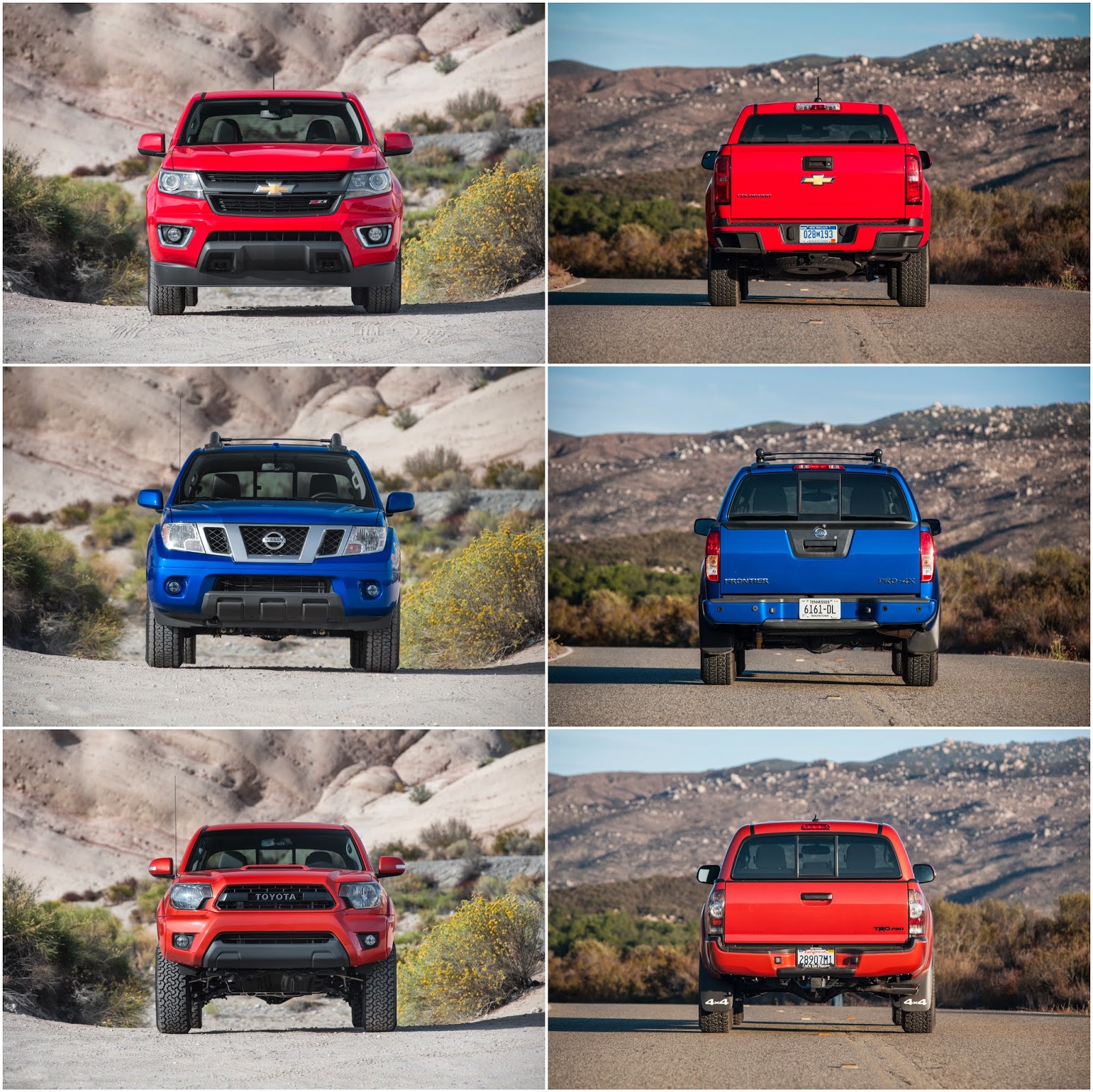
Although the ranks of rugged body-on-frame-type vehicles have dramatically shrunken over the last 20 years, the selection of off road-capable SUVs and trucks has never been better.
If anything, it's a sign of the natural evolution of vehicles. Most buyers don't want or need a vehicle that can scramble up a mountain, whether for sport or to reach a hiking trail or fishing spot. But for those who do, automakers now offer what might be the widest selection of dedicated off roaders ever. Few traditional SUVs without an off road-oriented model are left on the market; gone are the days of body-on-frame Ford Explorers that were neither especially useful on or off the pavement. In their place are unibody crossovers better attuned to the desires of suburban families and precisely-honed tools meant for dirt roads, sand dunes and technical trails.
Leftlane has spent considerable time off road in all ten of these vehicles, both on courses provided by manufacturers and in independent testing on our own trails. Picking the best of the best requires more than just a quick browse of the spec charts, even if those do help separate the mountain goats from the lamb chops.
Most of our top trucks feature generous ground clearance, locking differentials, two-speed transfer cases with an ultra high gear ratio for crawling and sophisticated traction control systems. Still, some vehicles are inherently more capable than others because of their basic suspension and body designs.
To keep things fair, we're only including new consumer-oriented trucks and SUVs available for the 2012 model year in the United States. We realize that buyers have varying definitions of driving "off road" that include everything from sandy beaches to bouncy trail riding, so vehicles were considered for their all-around competency rather than their ability to do a single task exceedingly well. Finally, we set a $60,000 price limit equal to about double the average price of a new car in the U.S. because only the looniest buyers might take a vehicle as expensive as a house in many cities on a trail.
The 10 most off-road capable new trucks and SUVs you can buy

10. Jeep Grand Cherokee. One of the most versatile vehicles, Grand Cherokee was reborn last year using a platform co-developed with Mercedes-Benz. Gone was the solid axle suspension, but an air system optional on Limited and standard on Overland models jacks up the fully independent setup to the kind of sky-high proportions that will have you looking down on just about anyone. A control knob like that used on Land Rovers tailors the traction control, ABS and suspension to any terrain. Despite its credentials, Grand Cherokees lack the tall sidewalls and super-flexy suspensions found on the most capable SUVs in the segment, so they have to rely heavily on power being sent to the right wheel at the right time.
Off road must-haves: Opt for the Off Road Adventure II package on a Limited ($1,655) and you'll get the Quadra Lift air suspension, skid plates, tow hooks and a few other goodies.
Great for: Raising the suspension and looking down on Range Rover buyers. While the Rover is an impressive vehicle, Grand Cherokee offers almost all the vehicular sophistication for a fraction of the price.
Off road must-haves: Opt for the Off Road Adventure II package on a Limited ($1,655) and you'll get the Quadra Lift air suspension, skid plates, tow hooks and a few other goodies.
Great for: Raising the suspension and looking down on Range Rover buyers. While the Rover is an impressive vehicle, Grand Cherokee offers almost all the vehicular sophistication for a fraction of the price.

9. Nissan Frontier PRO-4X. Nissan offers one of just two midsize/compact pickups that we consider competent, so we're lucky that the Frontier is a pretty formidable off roader. Its PRO-4X package adds a locking rear differential and, on automatic transmission models, hill descent control. Simple and rugged, Frontier PRO-4X is much more useful over most terrain than a full-size pickup.
Off road must-haves: PRO-4Xs are fully loaded from the factory.
Great for: Loading the bed up with camping gear and heading to the woods for a weekend.
Off road must-haves: PRO-4Xs are fully loaded from the factory.
Great for: Loading the bed up with camping gear and heading to the woods for a weekend.

8. Land Rover LR4. Land Rover might be synonymous with off roading, but the brand has found favor among city slickers who prefer big wheels and low profile tires that are about as well-suited to off roading as a pair of high heels are to hiking. To keep those wheels on the ground, Land Rover, like Jeep, now uses a fully independent suspension that provides a smooth ride on road but limits articulation off road. Despite those hinderances, however, the LR4 uses arguably the world's most advanced traction control system, which still makes it an incredibly capable off roader. But even Land Rover's off road driving instructors acknowledge that most owners won't even try to intentionally leave the pavement unless there's some slippery white stuff on the road between their Aspen vacation home and the ski lodge.
Off road must-haves: Buried among the luxury options Land Rover offers is a Heavy Duty Package ($750) that adds a locking rear differential and a full-size spare, two must-haves for leaving the pavement behind.
Great for: Trundling across the logging trails to the building site where your $25 million vacation home will be built.
Off road must-haves: Buried among the luxury options Land Rover offers is a Heavy Duty Package ($750) that adds a locking rear differential and a full-size spare, two must-haves for leaving the pavement behind.
Great for: Trundling across the logging trails to the building site where your $25 million vacation home will be built.

7. Toyota FJ Cruiser. A remake of the original Toyota Land Cruiser FJ40, the FJ Cruiser might have some curious proportions, but its short wheelbase, high ground clearance and excellent approach and departure angles make it a very useful off roader. It's just a shame that its compromised styling gives it dreadful visibility.
Off road must-haves: The Off-Road Package ($740) brings with it Bilstein shocks and a locking rear differential, not to mention a trick retro-style multimeter gauge.
Great for: Those who want to look pretty cool while heading to their favorite camping spot.
Off road must-haves: The Off-Road Package ($740) brings with it Bilstein shocks and a locking rear differential, not to mention a trick retro-style multimeter gauge.
Great for: Those who want to look pretty cool while heading to their favorite camping spot.

6. Nissan Xterra PRO-4X. Nissan's off road toolbox-on-wheels has been around for a while, but the general reshaping of the off road market has made us see it in a new, more favorable light. In some ways the last link to the SUV era of the 1990s, the Xterra feels a little dated but remains a sprightly off roader, especially with the PRO-4X (inspired by PRO-4 off road competition driving) package's standard locking rear differential. It's also the last SUV we can remember with a multi-leaf rear axle.
Off road must-haves: Channeling the spirit of the long-departed Pontiac Aztek, Nissan offers a tent ($252) that attaches to the back of the Xterra to provide 100 square feet of camping space.
Great for: Buyers who think of their SUVs as hose-out implements.
Off road must-haves: Channeling the spirit of the long-departed Pontiac Aztek, Nissan offers a tent ($252) that attaches to the back of the Xterra to provide 100 square feet of camping space.
Great for: Buyers who think of their SUVs as hose-out implements.

5. Ram Power Wagon. You can't buy a new Hummer, but the Power Wagon offers similar swagger. Building on the already robust Ram 2500, the folks at Chrysler robbed the Jeep Wrangler Unlimited's parts bin to add in automatically disconnecting swaybars and locking differentials. To finish the job, they tossed on a Warn winch and the kind of roof lights you see for sale next to CB radios at truck stops. What the Power Wagon lacks is subtlety; it's like using a machete to butter your toast.
Off road must-haves: We'd definitely order the spray-in bedliner ($450) so it would be easy to hose out guts of the various animals we might unintentionally kill. And the Technology Group's ($495) rear parking sensors might come in handy to reduce the number of pedestrian "incidents."
Great for: Drivers who want an in-your-face, go-anywhere beast that's as delicate and precise as Dick Cheney giving a eulogy.
Off road must-haves: We'd definitely order the spray-in bedliner ($450) so it would be easy to hose out guts of the various animals we might unintentionally kill. And the Technology Group's ($495) rear parking sensors might come in handy to reduce the number of pedestrian "incidents."
Great for: Drivers who want an in-your-face, go-anywhere beast that's as delicate and precise as Dick Cheney giving a eulogy.

4. Toyota Tacoma TRD Off-Road. Tacoma gained a nip-and-tuck for 2012 that gives it a better interior (and a questionable exterior), but its basic ruggedness remains. Long a favorite of the Taliban, for better or worse, Toyota's smaller pickups are world-renowned for their durability and simplicity. Opt for the TRD Off-Road package and you'll get a Tacoma that sits about a mile off the road, can accommodate tires suited to a dump truck and includes a useful locking rear differential.
Off road must-haves: The TRD Off-Road package (around $3,700, depending on model), which includes Bilstein shocks, extra skid plates and, most importantly, the locking rear differential.
Great for: A hunter's vehicle for those who need something more maneuverable than a big pickup.
Off road must-haves: The TRD Off-Road package (around $3,700, depending on model), which includes Bilstein shocks, extra skid plates and, most importantly, the locking rear differential.
Great for: A hunter's vehicle for those who need something more maneuverable than a big pickup.

3. Ford F-150 SVT Raptor. For 2012, Ford updated its dune-bashing beast with an innovative front camera with a built-in spray washer in a bid to appeal more to buyers looking for a rock-crawling vehicle. And, even though Raptor looks and feels more like an unstoppable desert runner, the camera really helps overcome this big truck's inherently trail-challenging dimensions. Even though Raptor features what might be the world's most robust suspension, however, it was its bulk that kept it from the runner-up position.
Off road must-haves: The optional navigation system ($2,470) provides a much larger and more central screen for the front camera, while the exterior graphics package ($1,075) makes the Raptor look even more bad ass.
Great for: Flying through the desert in Southern California or crawling up the suspension-twisting obstacles around Moab, Utah.
Off road must-haves: The optional navigation system ($2,470) provides a much larger and more central screen for the front camera, while the exterior graphics package ($1,075) makes the Raptor look even more bad ass.
Great for: Flying through the desert in Southern California or crawling up the suspension-twisting obstacles around Moab, Utah.

2. Toyota 4Runner Trail. As we've said, this was a close one, but the Toyota seems more useful for more people. Toyota breathed life into its 4Runner lineup in late 2009 with its more rugged fifth-generation model. Extensively tested on California's demanding Rubicon Trail, the 4Runner Trail package brings with it increased clearance, a locking rear differential, a Multi-Terrain Select system that tailors the traction control for any terrain, and an innovative Crawl Control that helps 4Runner inch along at a veritable snail's pace over any terrain through careful use of the traction control and ABS.
Off road must-haves: Kinetic Dynamic Suspension System ($1,750) is pricey but exceptionally effective at increasing wheel travel by automatically adjusting the sway bars depending on terrain.
Great for: As its name implies, 4Runner Trail makes an excellent do-it-all trail vehicle thanks to its roomy, family-friendly interior and plush on-road demeanor.
Off road must-haves: Kinetic Dynamic Suspension System ($1,750) is pricey but exceptionally effective at increasing wheel travel by automatically adjusting the sway bars depending on terrain.
Great for: As its name implies, 4Runner Trail makes an excellent do-it-all trail vehicle thanks to its roomy, family-friendly interior and plush on-road demeanor.

1. Jeep Wrangler Rubicon. There's not much to dispute about the Wrangler, especially since it gained a 260-horsepower V6 for 2012. One of few cars on the market to utilize rugged Dana 44 solid axles up front and out back, the Wrangler's coil springs offer the kind of suspension flexibility rock crawlers and trail riders dream of. Toss in its copious ground clearance, BFGoodrich mud tires, two locking differentials, automatic-disconnecting swaybars and an ultra-high crawl ratio and there's little here most buyers might see fit to upgrade.
Off road must-haves: Stick with the 4.10 rear axle ratio for better low-speed performance. We'd order the long wheelbase Unlimited unless our driving was strictly technical rock crawling.
Great for: Wrangler Rubicons are ready for just about anything right out of the factory. The new-for-2012 V6 and available five-speed automatic finally make it a usable daily driver, to boot.
Off road must-haves: Stick with the 4.10 rear axle ratio for better low-speed performance. We'd order the long wheelbase Unlimited unless our driving was strictly technical rock crawling.
Great for: Wrangler Rubicons are ready for just about anything right out of the factory. The new-for-2012 V6 and available five-speed automatic finally make it a usable daily driver, to boot.
News Source: http://www.leftlanenews.com